






NODO Media & Services JSC and the Institute of Forensic Science successfully complete acceptance testing of the “DNA Archive Management” project: a major step forward in digitising data for criminal investigation
The “DNA Archive Management” project — one of the most significant current applications of biotechnology to criminal investigation — has officially passed acceptance testing. The project was commissioned by the Institute of Forensic Science, Ministry of Public Security, with NODO Media & Services Joint Stock Company as the developer and implementation partner for the software system.
The milestone not only demonstrates the sector’s internal capability in the digital transformation of security investigation, but also opens a new direction: managing biological data with advanced technology to support crime prevention and investigation more effectively.
DNA archives: an inevitable step for modern criminal investigation
As crime becomes increasingly sophisticated and organised, identification and tracing through genetic data is proving to be a particularly effective tool in modern criminal investigation. A DNA archive system is not merely a repository of biological information; it also serves as a centre for analysing, identifying and verifying the identities of suspects, victims and related individuals in a scientific, rapid manner with near-absolute accuracy.
Beyond individual identification, the system provides strong support for kinship searches — including establishing father-child, mother-child and extended family relationships, as well as tracing individuals in complex cases or situations requiring identification across multiple generations. This forms a foundation for improving investigative efficiency, shortening case processing times and contributing to a comprehensive, in-depth national biological database.
Notably, the system has been designed to integrate and share data with Department C06 in order to synchronise with the National DNA management system, ensuring consistency, interoperability and effective support for operational work nationwide.
Building this system reflects not only the Ministry of Public Security’s determination to modernise its operations, but also shows that Vietnam is moving closer to the criminal investigation practices of developed countries. NODO is honoured to have been selected as a trusted partner to develop and deliver this project.
A rigorous, methodical implementation roadmap down to every work item
The project was launched in December 2024 with the goal of building a dedicated software platform tailored to the operational needs of the Institute of Forensic Science. Under the coordination of project manager Nguyen Truong Xuan, together with a team of experienced colleagues who had previously worked on major Ministry of Public Security projects such as the Citizen Identification system, the entire project process was designed to be tightly structured, with close control over schedule, quality and information security.
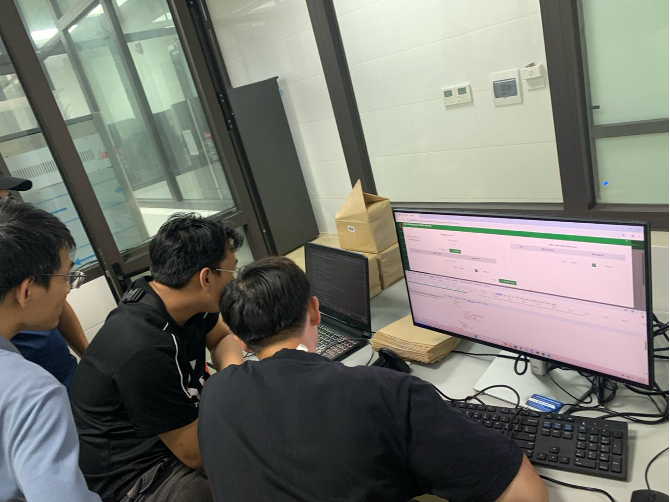
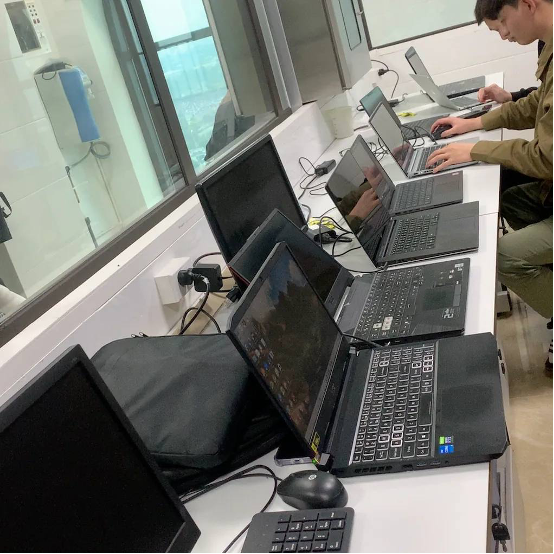
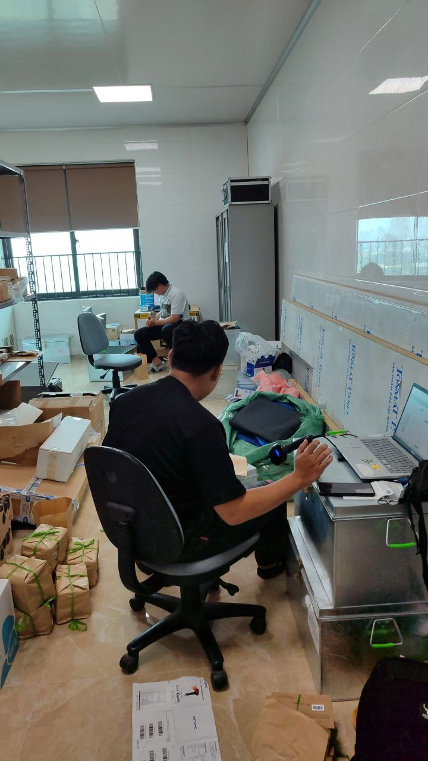
Throughout implementation, the project team worked at high intensity for many consecutive months. Team members frequently worked overtime and weekends to keep to schedule and promptly handle change requests arising from the operational units. On many occasions, the whole team was on site to test, fine-tune and ensure the system ran reliably in real-world conditions. Every step forward was the result of smooth coordination, a high sense of responsibility and the relentless commitment of the entire team.


Key implementation milestones:
- 1 November 2024: project kickoff.
- 23 March 2025: the implementation team officially entered the sample collection phase, accompanying working delegations from the Institute of Forensic Science to a series of key correctional facilities across the country. The DNA sample collection journey covered locations including:
- Hong Ca Prison (Yen Bai)
- Xuan Nguyen Prison (Hai Phong)
- Thanh Cam Prison and Thanh Lam Prison (Thanh Hoa)
- Xuan Ha Prison (Ha Tinh)
- C09C Da Nang, An Diem Prison (Quang Nam)
- Tong Le Chan Prison (Binh Phuoc)
- Kenh 5 Prison (Kien Giang)
- C09B Ho Chi Minh City, Phu Hoa Prison, An Phuoc Prison and many other units.


These were not ordinary field trips, but a real-world stress test for the entire system. The software modules supporting DNA sample collection were trialled for the first time in a live operating environment, with many unexpected scenarios and varying infrastructure conditions.
The project team took on more than a technical role: they directly supported Institute officers with data entry, sample coding and data synchronisation checks. With constant travel, difficult terrain and a heavy workload, NODO’s engineers had to demonstrate flexibility, quick thinking and a high degree of adaptability to the forensic operating environment.
It was precisely during this on-site phase that the software system proved its effectiveness, while also generating valuable feedback for further refinement and completion ahead of formal handover.
- 15 May 2025: the complete version of the system was officially handed over, after going through technical testing phases and refinements based on feedback from the Institute. This version met requirements for processing speed, usability and reliability in operational use.
- On 2 June 2025, as part of the project, a training and system handover programme for operational officers was officially rolled out. These are the people who will use the system directly during investigation, verification and biological data management at units of the Institute of Forensic Science, Ministry of Public Security. The training course was designed to be practical and highly applied, combining software instruction with specific simulated operational scenarios. The content focused on data entry, processing, analysis and DNA information retrieval — tasks that demand absolute accuracy in a criminal investigation environment. Notably, the implementation team acted not only as technical staff but also guided officers through hands-on work with sample data, helping trainees gain a deep understanding of how the system operates and the operational purpose behind each step. This is regarded as an important stage in bringing the technology into real-world operation, ensuring the system is not only technically complete but also operated effectively, securely and in line with operational standards from the front line.



- 23 June 2025: after the system passed all evaluation rounds, with operating performance and security confirmed, the project formally passed acceptance testing. This is considered a landmark in the modernisation of criminal investigation through biological data in Vietnam.
Technology as the foundation — operational expertise as the backbone
The system is built on advanced technology platforms including Java, VueJS, Oracle, Redis and Elasticsearch. As a result, the software can process large volumes of data in real time while also scaling flexibly as data volumes grow in the future.
Engagement, connection and partnership: the formula behind an effective project
Throughout development, NODO provided more than technical support: it also organised numerous engagement and networking activities with the Institute of Forensic Science. Sports sessions, for example, strengthened the bond between the project team and operational officers, creating the seamless coordination that proved decisive to the project’s success.


From software to an operational transformation
The DNA Archive Management project is not just a software product; it is a strategic tool in the digital transformation of the public security sector. Deploying the system has significantly shortened information processing times during investigations, improved accuracy in individual identification, and ensured that DNA data is stored and managed to the highest information security standards.
Importantly, the system has been developed in line with government direction and policy, including the Prime Minister’s guidance on progressing towards DNA data management for all Vietnamese citizens, integrated into the Citizen Identification system. This is a significant step towards building a unified biometric data foundation serving multiple strategic objectives such as crime prevention, population management, identity verification and future civil applications.
The project’s success shows that when technology and operational expertise advance together, the result is not only greater productivity but a fundamental change in how criminal investigation work is carried out.
Looking ahead — scaling the impact
The system is now ready to scale up nationwide, working towards an interconnected DNA data ecosystem across operational units. This lays the groundwork for criminal investigation based on scientific, digitised and accurate data, rather than relying on traditional manual, judgement-based approaches.
The successful delivery of the project marks a technological breakthrough in the forensic field and also affirms NODO’s professional capability, credibility and brand as a software system developer. The implementation has demonstrated the company’s ability to meet strict technical requirements, demanding schedules and the highest information security standards. In doing so, NODO has made a strong impression with state agencies, opening up many opportunities for strategic cooperation with ministries and sectors in developing and deploying large-scale technology systems that support management, administration and national security.